
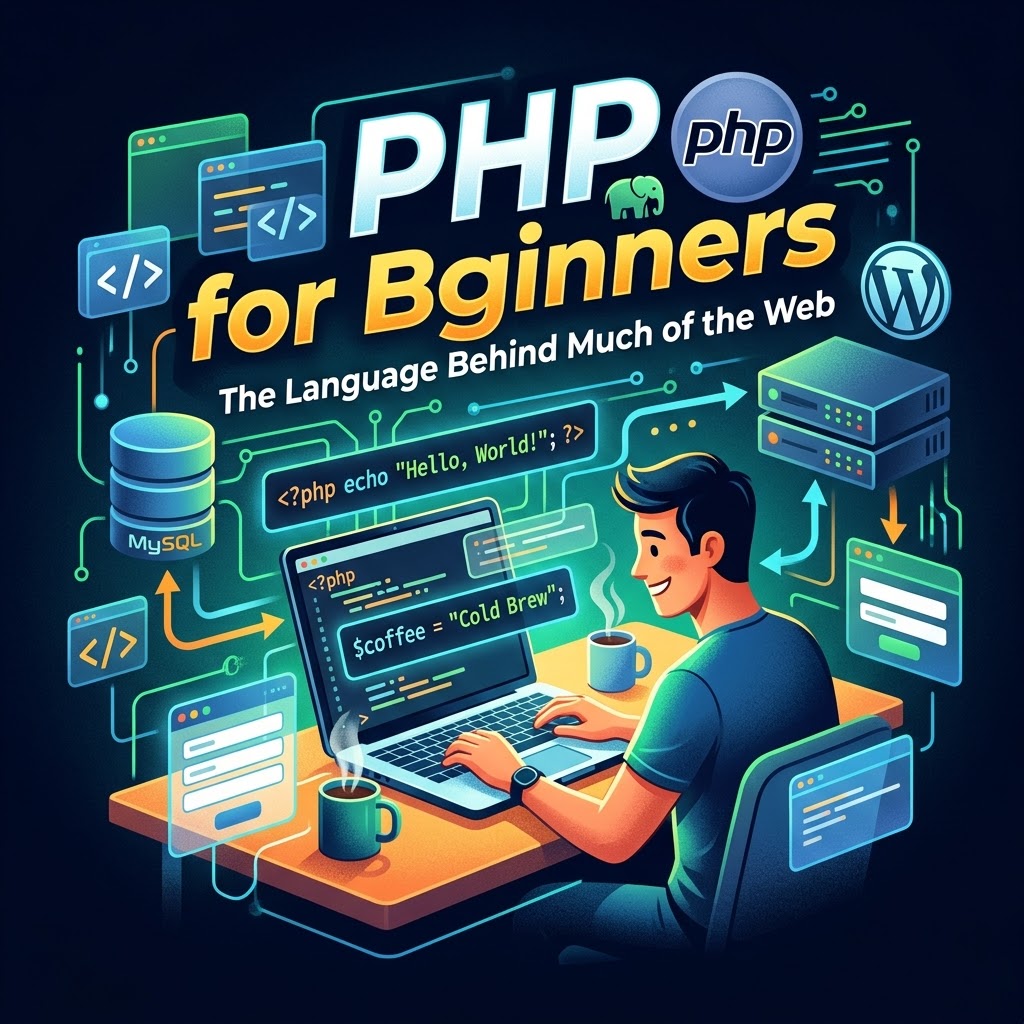
PHP for Beginners: The Language Behind Much of the Web
Whether you’re sipping your morning coffee or taking a break between coding sessions, you’ve probably visited a website powered by PHP without even realizing it.
In fact, some of the web’s most popular platforms, including WordPress, use PHP behind the scenes to generate pages, process forms, manage databases, and power millions of websites.
So what exactly is PHP, and why does it still matter?
Let’s break it down.
What Is PHP?
PHP (Hypertext Preprocessor) is a server-side programming language designed specifically for web development.
Unlike HTML, CSS, and JavaScript, which run in the visitor’s browser, PHP runs on the web server before the page ever reaches the user.
Think of it like a barista preparing your coffee behind the counter. The customer only sees the finished drink, not the process happening in the kitchen.
When a visitor requests a page:
- The server runs any PHP code.
- PHP generates the final HTML.
- The completed page is sent to the browser.
The user never sees the PHP code itself. They only see the result.
Why Is PHP So Popular?
PHP has been around for decades, yet it’s still one of the most widely used programming languages on the web.
Some reasons developers continue to use it include:
- Easy to learn for beginners
- Built specifically for web development
- Works with databases like MySQL
- Runs on most hosting providers
- Large community and countless resources
- Powers popular content management systems (CMSs)
If you’ve ever created a WordPress website, you’ve already benefited from PHP.
PHP Powers WordPress
One of PHP’s biggest claims to fame is WordPress.
When you create a blog post, publish a page, or install a theme, PHP is working behind the scenes to make it happen.
For example, when someone visits a blog post:
- PHP retrieves the content from the database
- PHP combines it with the site’s theme
- PHP generates the final webpage
- The browser displays the completed page
Without PHP, WordPress wouldn’t function the way it does.
And WordPress isn’t alone. Many websites, ecommerce stores, membership platforms, and custom web applications use PHP every day.
Your First PHP Script
Let’s start with the classic example:
<?phpecho "Hello, World!";?>How to Read It
<?phptells the server that PHP code is beginning.echooutputs text.- “Hello, World!” is the text being displayed.
?>ends the PHP block.
When the server runs this code, the visitor sees:
Hello, World!
Simple, but powerful.
Variables in PHP
Variables allow you to store information for later use.
<?php$coffee = "Cold Brew";echo $coffee;?>How to Read It
$coffeeis a variable.- “Cold Brew” is the value being stored.
echo $coffee;displays that value.
Output:
Cold BrewNotice something unique?
PHP variables begin with a dollar sign ($).
That’s one of PHP’s most recognizable features.
PHP Can Make Decisions
Just like JavaScript, PHP can respond differently based on conditions.
<?php$temperature = 85;if ($temperature > 80) {echo "Time for an iced coffee!";}?>If the condition is true, the message appears.
If not, PHP skips it.
This ability to make decisions is what allows websites to create personalized experiences for users.
Working With Databases
One reason PHP became so popular is its ability to work with databases.
Imagine you’re building a coffee shop website.
Instead of creating separate HTML pages for every product, you can store products in a database and have PHP retrieve them whenever they’re needed.
The process looks something like this:
- User visits the page.
- PHP requests data from the database.
- Database returns the information.
- PHP builds the page using that data.
- The user sees fresh content.
This is how blogs, forums, ecommerce stores, and user accounts typically work.
PHP and JavaScript: What’s the Difference?
Beginner developers often mix these two up.
Here’s the quick version:
| PHP | JavaScript |
| Runs on the server | Runs in the browser |
| Generates content before the page loads | Handles interactions after the page loads |
| Often works with databases | Often updates the page without refreshing |
| Hidden from visitors | Visible in browser developer tools |
The two are frequently used together.
PHP builds the page.
JavaScript makes it interactive.
The Takeaway
PHP may not be the newest language on the block, but it’s still one of the most important technologies powering the modern web.
Use PHP when you need to:
- Process forms
- Work with databases
- Build dynamic websites
- Create user authentication systems
- Power WordPress websites
- Generate content on a server before it reaches the browser
Think of PHP as the worker behind the counter. Visitors don’t see it, but it’s often responsible for preparing everything they do see.
Now take another sip of coffee, fire up a local server, and try your first PHP script. You might be surprised how much of the web is powered by those little <?php ?> tags.
Erase this from the blog, but use as a highlighting start point.
Leave a Reply